ServicesWhole-Home Filtration
Whole-Home Filtration in Oldsmar
We fit a carbon filtration system where water first enters your home, so the kitchen, bathrooms, laundry and water heater all draw treated water. Once it is running, we follow up with you and explain the simple care that keeps it working well.
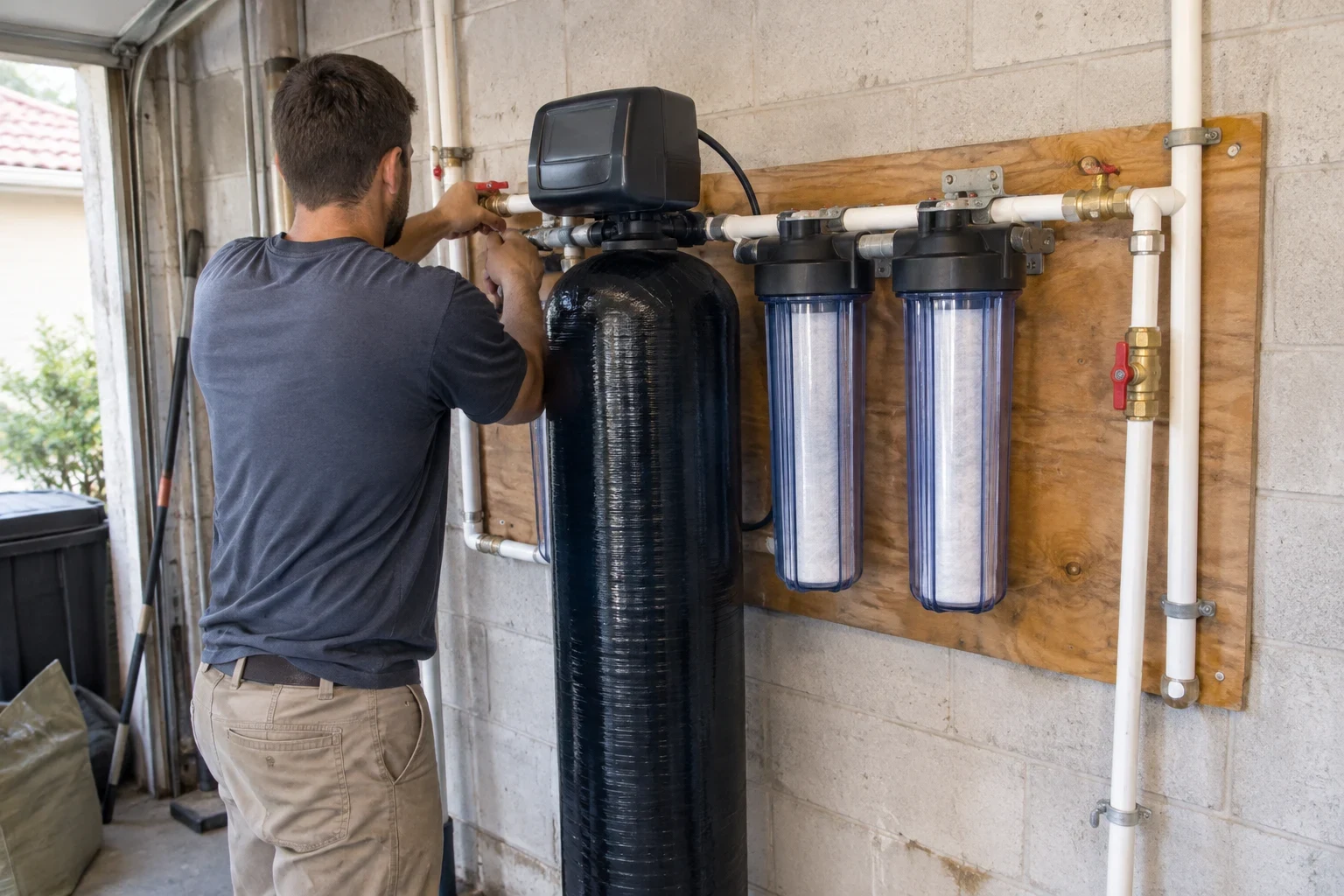
Treated water from the first valve onward
The system is installed on the main supply, most often in the garage or beside an outside wall where the line comes in. Incoming water flows through a sediment cartridge first, then through a tank of carbon media that strips out the chlorine taste and odor. By the time it reaches a faucet, shower, washing machine or water heater, it has already been treated.
It makes sense when the problem shows up in every room: a swimming-pool scent while you shower, coffee with a flat chemical edge, fine grit gathering in faucet screens. If you only care about the water you drink, an under-sink reverse osmosis unit may serve you better, and we will tell you that plainly. If white scale on glass doors and fixtures bothers you most, a water softener, alone or paired with filtration, may be the more useful choice.
What comes with the installation
Sized for your busiest hour
Before recommending a tank, we count bathrooms and people and check the diameter of your main line. An undersized tank can't keep up when a shower and the dishwasher run together, and pressure suffers. We choose a size with room for your heaviest use.
Carbon matched to your water
Granular carbon is a sound, standard choice for chlorine. If your supply is treated with chloramine, catalytic carbon is built to break it down. We explain both before you decide.
A sediment stage up front
A prefilter cartridge traps sand and grit before it reaches the tank, keeping the carbon bed clean and extending its life.
Bypass valve and tidy plumbing
Each system includes a bypass, so your home keeps water while the filter is being serviced. Runs are straight and supported with proper fittings, and the work area is left clean.
A tour of the finished system
Before we pack up, we point out the bypass, the prefilter housing and the control valve display. You'll know what each piece does and when it will need you.
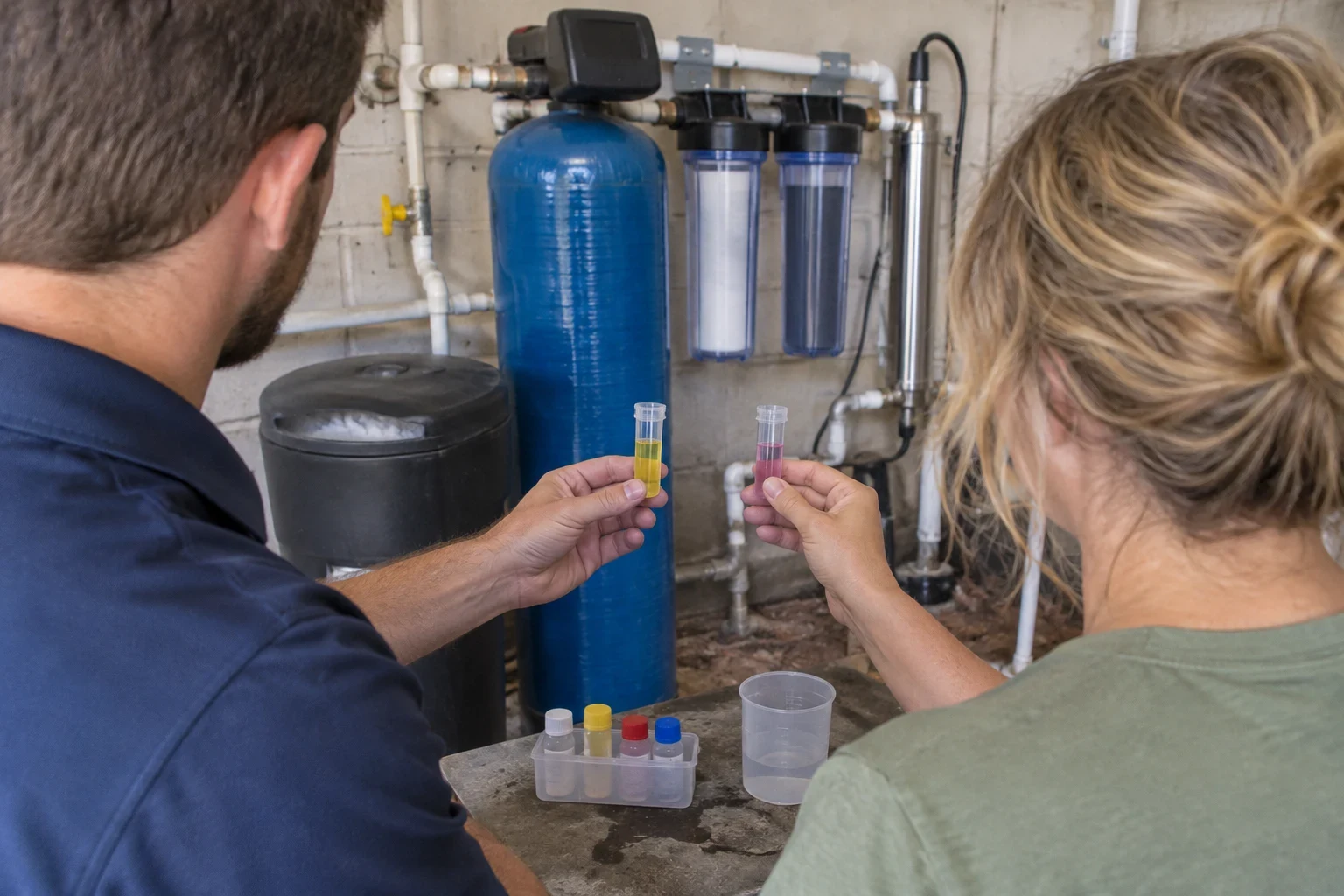
Signs your home would benefit from whole-home filtration
- Shower steam that smells like a pool
- Heat drives chlorine out of the water and into the air, which is why the scent is sharpest in a hot shower. An under-sink filter in the kitchen never touches the water reaching that bathroom.
- A chemical taste in coffee or ice
- If morning coffee or cubes from the ice maker carry a faint chlorine taste, the line feeding those appliances is where treatment needs to start.
- Sand in aerators and showerheads
- Fine grit collecting in faucet aerators and showerhead nozzles points to sediment. A prefilter catches it before it lodges in fixtures or settles inside appliances.
- Showers that leave skin feeling tight
- Many people tell us showers feel gentler on skin and hair once chlorine is taken out before the water reaches the bathroom.
- An inherited filter with no service log
- A tank that came with the house and has no records may have spent its media long ago. Our water softener and filtration system replacement page covers how we approach that.
How a whole-home installation runs
- 1
It begins with a phone conversation
Tell us what you are noticing and where your main line enters the house. We will ask how many bathrooms and people you have and what equipment is already installed, and you get your quote by phone.
- 2
Installation day
We shut the water off briefly to fit the bypass valve, then set the tank on a level base. Most of the visit is unhurried plumbing work, with floor coverings laid along every path we use.
- 3
Rinsing the media and testing
New carbon releases fine dust at first, so we flush the bed until the water runs clear. Every joint gets checked for drips, and we confirm pressure at your faucets and showers.
- 4
Our follow-up call
Some weeks after the install, we contact you to ask how the water tastes and whether you have noticed any change. It is a natural time to raise care questions, and we explain what the next prefilter change will involve.
What shapes the price of a whole-home system
Every home is plumbed a little differently, so we price the job once we know how yours is laid out. The quote you get by phone includes the equipment, the media and the labor for a proper installation. We go through each line with you so the total is clear before any work starts.
- Household size and peak demand
- A home with several bathrooms and a full house needs a larger tank holding more media. That extra capacity keeps pressure even when water is running in more than one place.
- Standard or catalytic carbon
- Catalytic carbon, used for chloramine, costs more than standard granular carbon. When your water needs it, it is still the correct material.
- Reaching the main line
- An exposed line in the garage takes less time than one behind drywall or in a cramped spot outdoors.
- Drain and power
- A tank that backwashes has to be near a drain and an electrical outlet. Upflow tanks skip backwashing and need neither, which can make the installation simpler.
- Added stages
- Pairing the filter with a softener or extra sediment stages means more components and more hours on site.
Common questions about whole-home filtration
- Will it take out chloramine, or only chlorine?
- Standard carbon removes chlorine readily but is slow against chloramine. Catalytic carbon is designed for chloramine, and we choose it when that is what your supply carries. Our chlorine and chloramine removal page goes into more detail.
- Will I lose water pressure?
- A properly sized tank shouldn't change the pressure you feel at the tap. A drop usually traces back to a tank too small for the household or a sediment cartridge left in too long. We size around your heaviest use and show you how the cartridge comes out, so neither becomes a problem.
- What maintenance does the system need?
- The sediment cartridge is replaced on a schedule that depends on your water and how much you use. The carbon media goes much longer between changes. We offer ongoing customer support for maintenance, filter replacements, and service needs, so you can phone us whenever something is due.
- Is reverse osmosis still worth adding?
- That comes down to what you want from your water. Whole-home carbon improves taste and odor at every faucet, and reverse osmosis adds a finer stage at a single sink for drinking and cooking. Plenty of homeowners choose to have both.
- What happens once the install is finished?
- Some weeks later we check in to see how the system is running and to answer any questions you have collected. You will already know where the bypass and prefilter sit, and you can phone us any time something deserves a look.
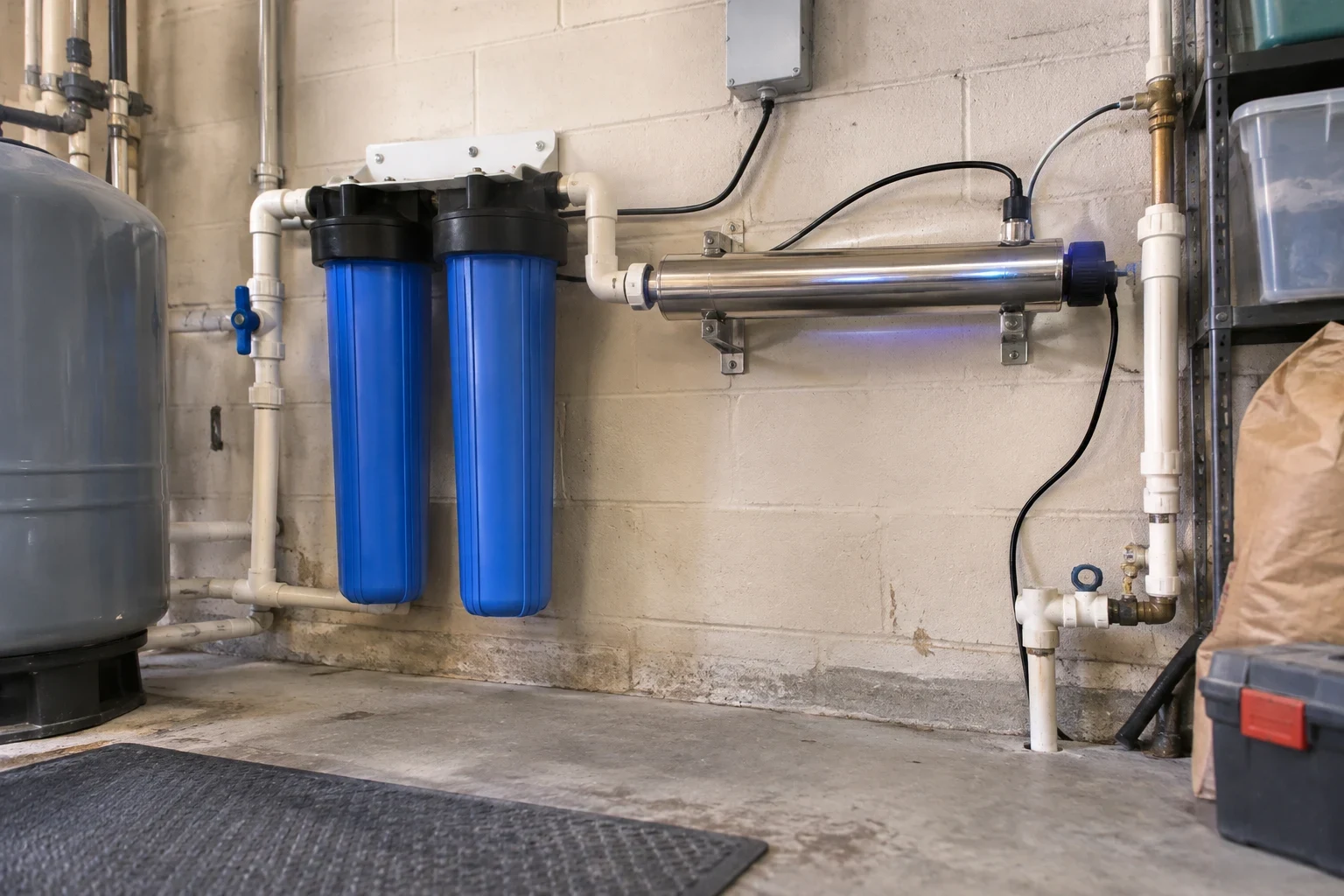
Better water in every room of your home
Give us a sense of how your water looks, smells and tastes. We'll suggest a system, walk you through its care and give you a quote by phone.