ServicesChlorine & Chloramine Removal
Chlorine & Chloramine Removal in Oldsmar
City water is disinfected for good reason, but the taste and smell don't need to follow it into your glass or your shower. We fit a carbon system matched to the disinfectant your utility uses, then check back once it has settled in.
What this system does in your home
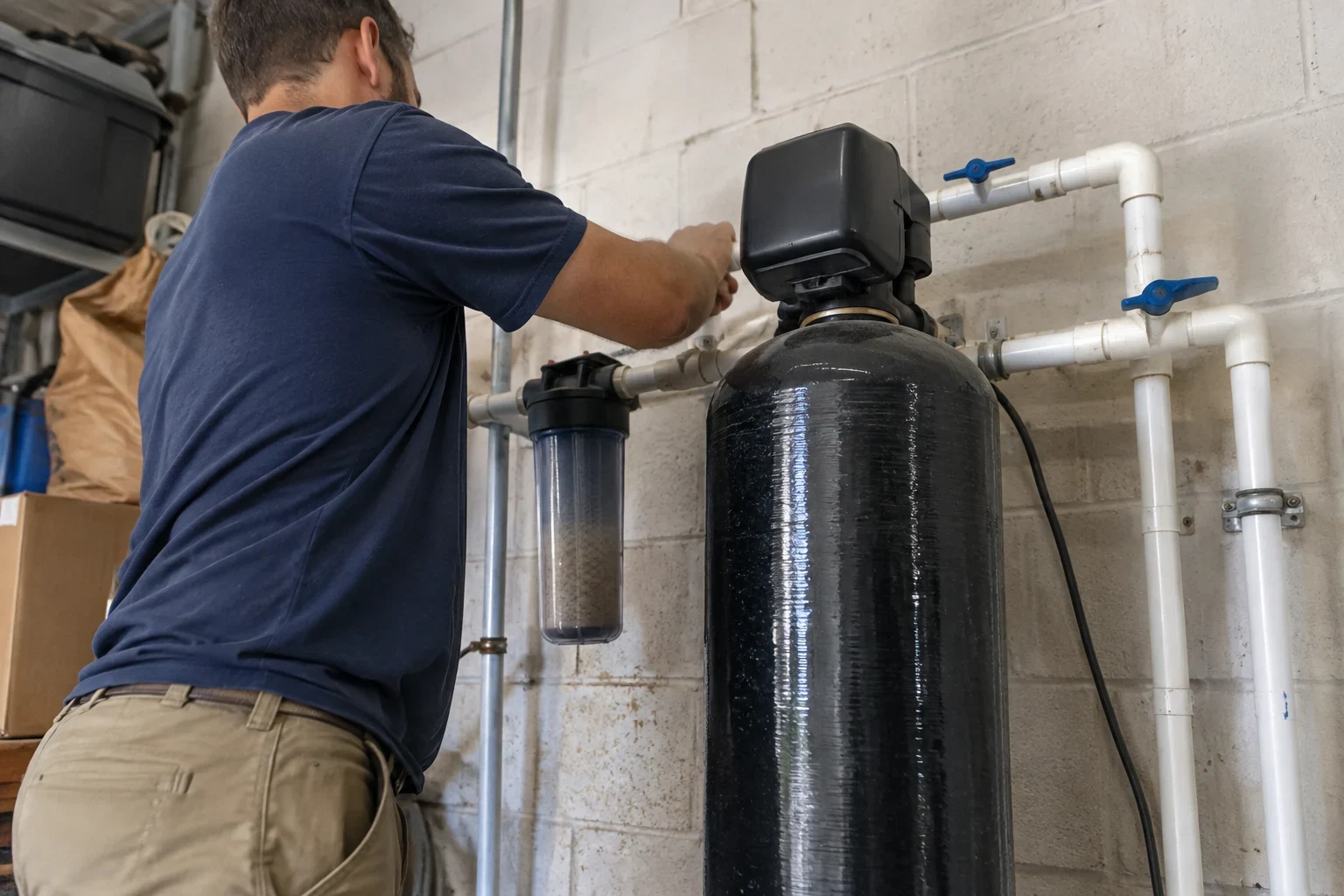
Utilities add chlorine or chloramine so water stays safe on its way through miles of pipe. Once it reaches your home, that job is done. A point-of-entry carbon system removes the disinfectant where the line comes in, so every tap, shower and appliance gets water without the chemical taste and smell.
The two disinfectants behave differently. Free chlorine is fairly easy for ordinary activated carbon to remove, and much of it will even gas off from a pitcher left in the fridge. Chloramine is more stable. It won't fade on its own, and standard carbon handles it slowly. For chloramine we use catalytic carbon, a surface-enhanced media made for that reaction, in a tank sized so the water spends enough time in contact with it.
Your utility's annual water quality report names the disinfectant it uses, and we read it with you before recommending anything. If drinking water is your main concern rather than the whole house, our Reverse Osmosis page covers an under-sink option.
What the installation includes
A media choice that fits your water
Catalytic carbon for chloramine, high-grade activated carbon where free chlorine is the only disinfectant. We explain which one you're getting and why.
A tank sized to your household
We size the tank from the number of bathrooms and how your home uses water at its busiest. Too small a tank lets water rush through without enough contact, and the taste comes back early.
Sediment prefilter
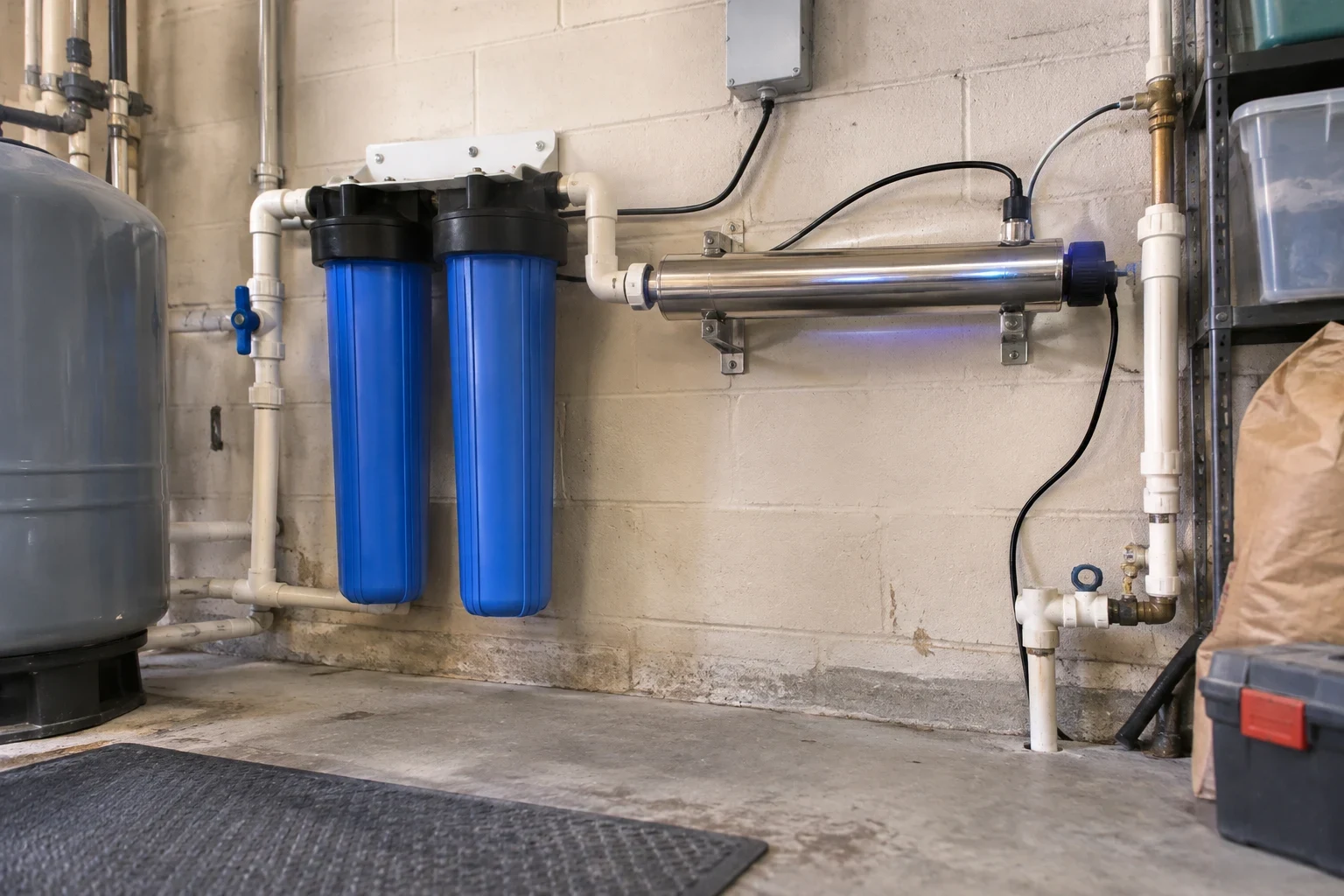
Ahead of the carbon sits a cartridge housing that traps sand and loose scale from the line. Keeping that debris out lets the carbon bed flow evenly and last longer.
Bypass valve and clean plumbing
A bypass lets you keep water running if the system ever needs service. Connections are neat, supported and labeled, so you or anyone who works on it later can see how the water flows.
A full rinse and a walkthrough
Fresh carbon sheds a fine dark powder in its first gallons, so the system is rinsed until the water runs clean before our visit ends. Then we point out the valve, the prefilter housing and the few things worth keeping an eye on.
The check-in that follows
A few weeks into use, we follow up to ask how the water tastes and answer questions. Our ongoing customer support for maintenance, filter replacements and service needs carries on from there.
Signs your water would benefit from carbon
A pool smell at the tap
If a glass of cold water smells like a swimming pool, the disinfectant is reaching you at levels you can notice.
Dry skin and hair after showers
Hot water releases chlorine into the steam you breathe. Many people notice softer-feeling skin and hair once it's filtered out.
Coffee and tea that taste flat
Chlorine compounds dull delicate flavors. Ice cubes and pasta water pick up the same off note.
Rubber parts wearing out early
Chloramine is hard on some rubber, so toilet flappers, fixture washers and appliance seals can crack sooner than they should.
Fish tanks and plants
Chloramine must be removed before tap water goes into an aquarium, and some gardeners prefer it out of watering water too.
Stronger smells at times of year
Some Florida utilities switch briefly to free chlorine for system maintenance. If those weeks bother you, filtration takes the edge off.
How the work goes
- 1
A first talk on the phone
You tell us what you're tasting or smelling, the size of your household and whether a softener or other equipment is already in place. Those answers decide what we look at during the visit.
- 2
Site visit at your home
We locate the spot where your water service comes into the house, which is often the garage or an exterior wall, and check the space along with nearby drain and power. You then get a written recommendation explaining each component.
- 3
Installation day
We shut off the water, cut in the system with its bypass, protect the floor and work area, and flush the carbon until the water runs clear. Most homes are back on water the same afternoon.
- 4
Care instructions
Before we leave we show you how to change the prefilter, how to use the bypass and roughly when the carbon will need attention for your usage.
- 5
We check back
Once the system has run for a few weeks, we get in touch to see how the water tastes and smells. If anything seems off, we come out and look.
What shapes the cost
Every home is quoted on its own, and we walk you through each line before any work starts. The biggest swings come from which disinfectant you're removing and how much water your home moves at once.
- Chlorine or chloramine
- Chloramine calls for catalytic carbon and more contact time, which usually means a larger tank of more specialized media.
- Household size and flow
- More bathrooms and more people at peak hours need a bigger tank to keep water in contact with the carbon long enough.
- Where the system goes
- An open garage wall is simple. Tight closets, long reroutes or an exterior location that needs a protective cover add time and material.
- Equipment already in place
- If you have a softener or older filter, we may tie in around it or suggest replacing it. Our Water Softener & Filtration System Replacement page explains that work.
Questions about chlorine and chloramine removal
Something not covered here? (813) 544-4850
How do I know whether my water has chlorine or chloramine?
Your utility publishes an annual water quality report that names the disinfectant. We go over it with you before recommending a system. If chloramine is listed, plain carbon won't be enough on its own.
Won't removing chlorine make my water unsafe?
The disinfectant's job is protecting water in the public pipes, and that's finished when it reaches your meter. Water inside your home is used quickly, so removing the disinfectant at that point is common practice. We keep plumbing connections clean during installation for the same reason.
Do I still need a drinking water system?
Carbon handles taste, smell and the disinfectant very well. Some households also add an under-sink reverse osmosis unit for the water they drink and cook with. We'll tell you plainly if we think the carbon alone covers what you want.
What maintenance does it need?
The sediment prefilter is changed periodically, and the carbon media is replaced once it has worked for years, depending on your water use and the disinfectant. We show you the prefilter change at installation and remind you when the carbon is due.
Will the system lower my water pressure?
A properly sized tank should cause very little drop you'd notice. Pressure problems usually come from an undersized system or a clogged prefilter, which is one reason we size carefully and check back once it's running.
Ready for water without the pool smell
Tell us about your home and what you're tasting, and we'll explain which carbon fits. Once the system is in, we stay in touch to make sure it keeps doing its job.