ServicesWater Softeners
Water Softeners in Oldsmar
Hard water leaves crust on fixtures, film on glass and scale inside your water heater. We size a softener to the water your home actually uses, install it neatly at the main line, then check back once it has run for a while.
When a softener is the right call
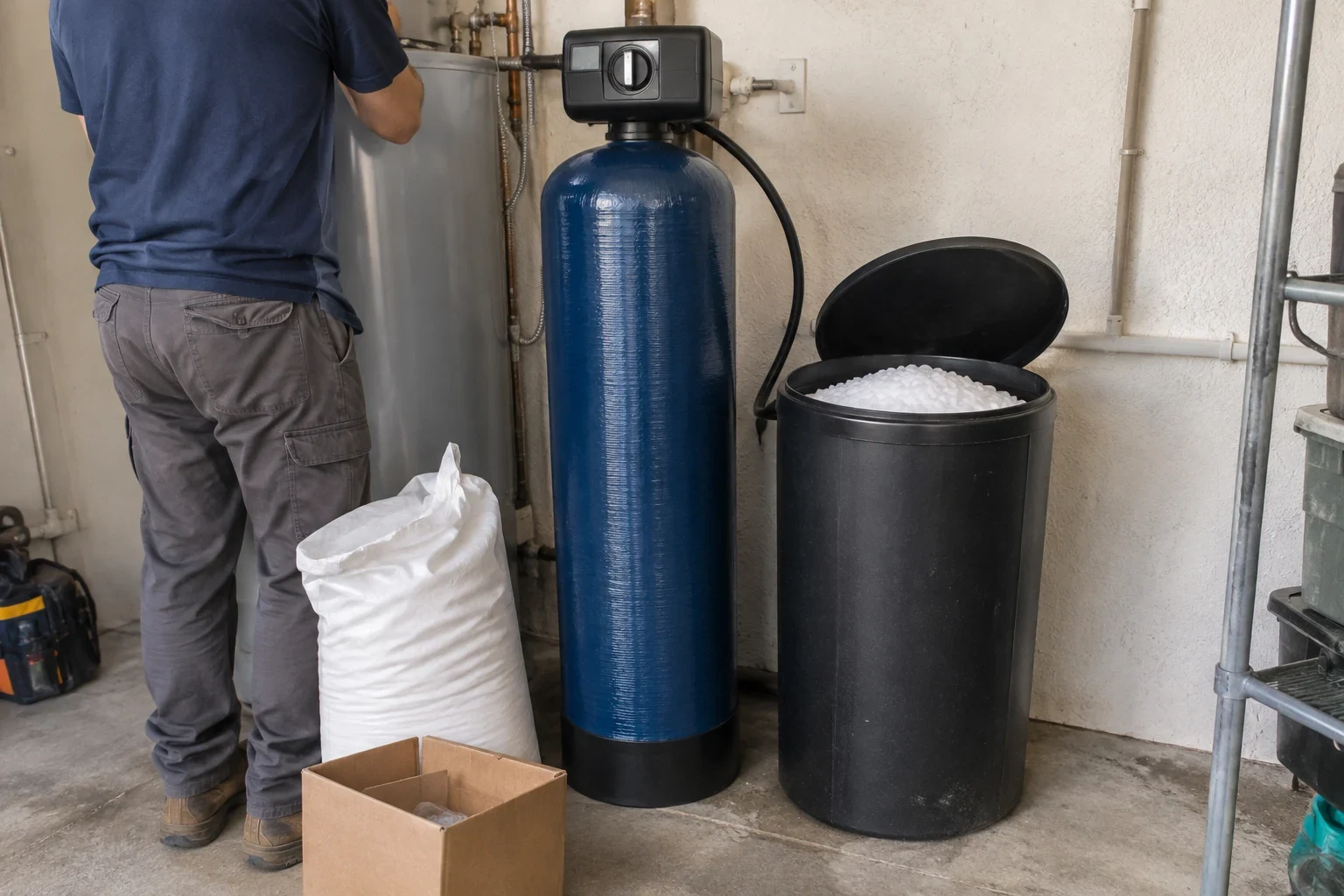
Hardness comes from dissolved calcium and magnesium. A softener strips those minerals out at the point where water enters your home. Resin beads inside the mineral tank hold onto them and release sodium or potassium in exchange, and the control valve flushes the resin with brine on a set schedule. With regular salt, the system keeps doing its job for years.
A softener does not filter. Chlorine taste and odor pass straight through it, and it is not designed to treat drinking water. If taste is what bothers you, start with our chlorine and chloramine removal or whole-home filtration pages. Plenty of homes in Oldsmar use both, with a carbon stage placed ahead of the softener.
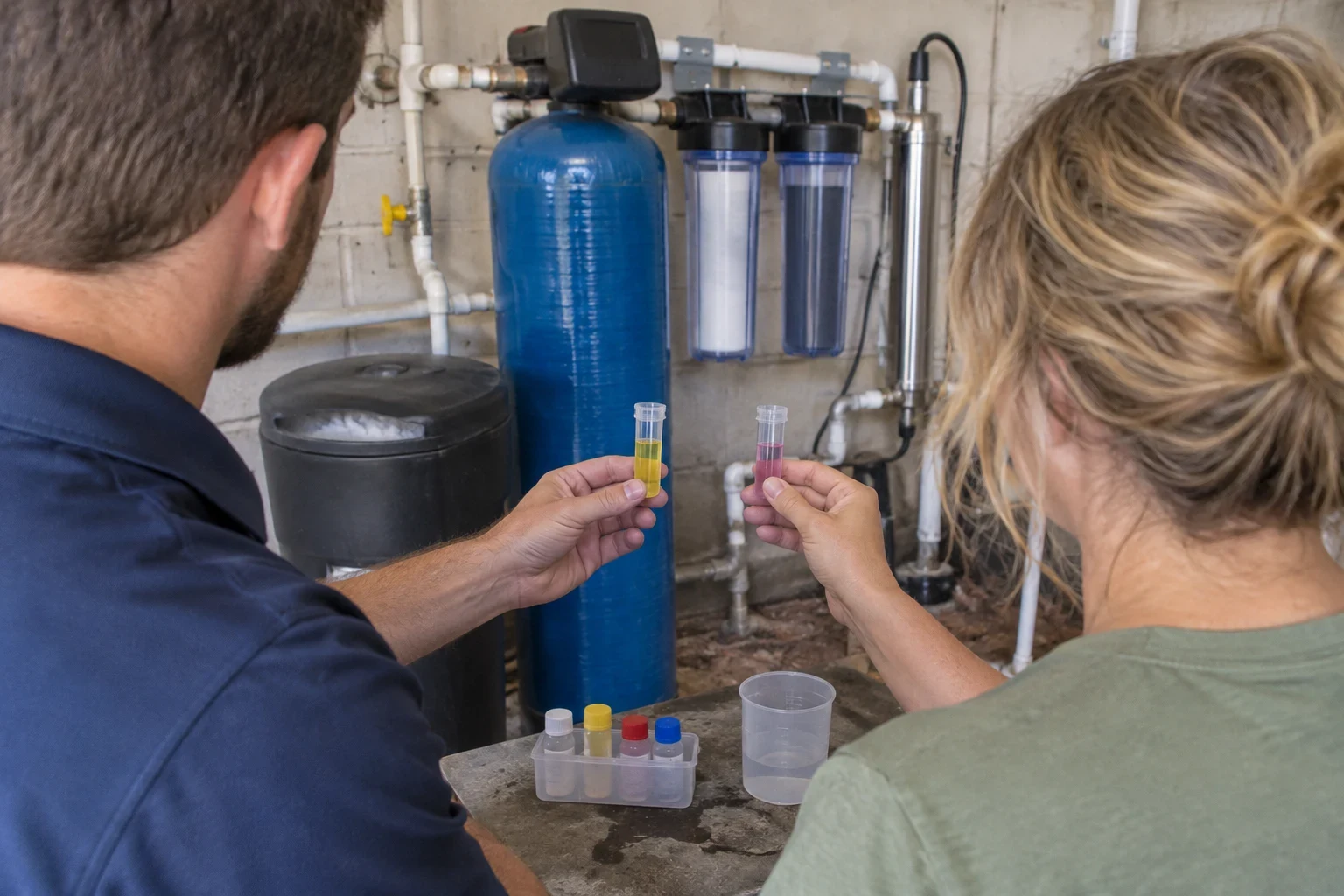
The right system matters more to us than the largest one. Before recommending anything, we review the hardness figure in your utility's water quality report or a recent report you already have, look at the scale your fixtures are showing, and ask how many people live in your home.
What a softener installation includes
- Sizing by grain capacity
- We set the resin volume against your hardness and how much water your home goes through each day. Too little resin forces frequent regeneration and burns through salt. Too much leaves resin sitting unused between cycles.
- Bypass valve and main-line connection
- The softener is plumbed into the main line with a bypass valve, so water keeps flowing if the unit is ever taken offline for service. Fittings are cut square, supported and left tidy.
- Drain line and air gap
- Regeneration water needs a proper path to a drain. We route the line with an air gap so wastewater can never siphon back into your supply.
- Brine tank setup
- We place the brine tank where a bag of salt is easy to lift in, add the first fill and show you the level to hold it at.
- Programming the control valve
- We enter your hardness, household size and regeneration time, usually overnight, so the cycle stays clear of morning showers.
When hard water starts showing up in your home
Scale that returns after cleaning
Faucets, shower heads and glass doors take on a pale, rough film of mineral scale. You scrub it away, and within days it is back.
Hazy glassware
Glasses come out of the dishwasher marked and cloudy, even with rinse aid. That is usually the water at work, not a fault in the machine.
Soap that barely foams
Calcium and magnesium bind with soap, so shampoo and detergent foam poorly and you use more of each. Skin can still feel coated after rinsing.
A noisy water heater
Popping or rumbling from the tank often means scale has settled on the bottom. Over time the heater spends more energy warming the same amount of water.
A softener that has fallen behind
If you already have a unit and the spotting is creeping back, it may need service or it may be time to retire it. Our water softener repair and maintenance and system replacement pages explain both paths.
What moves the cost
Every home's water and plumbing are a little different, so we price each softener after seeing the setup. The estimate lists the unit, parts and labor separately, so nothing appears on the final bill that was not discussed first.
Capacity and resin volume
Larger households and harder water call for more resin, which means a larger tank.
Metered or timed valve
A metered valve regenerates based on actual water use and saves salt, but it costs more upfront than a simple timer.
Plumbing access
A main line in an open garage is straightforward. Tight closets, long drain runs or older pipe that needs new fittings add time.
Pairing with filtration
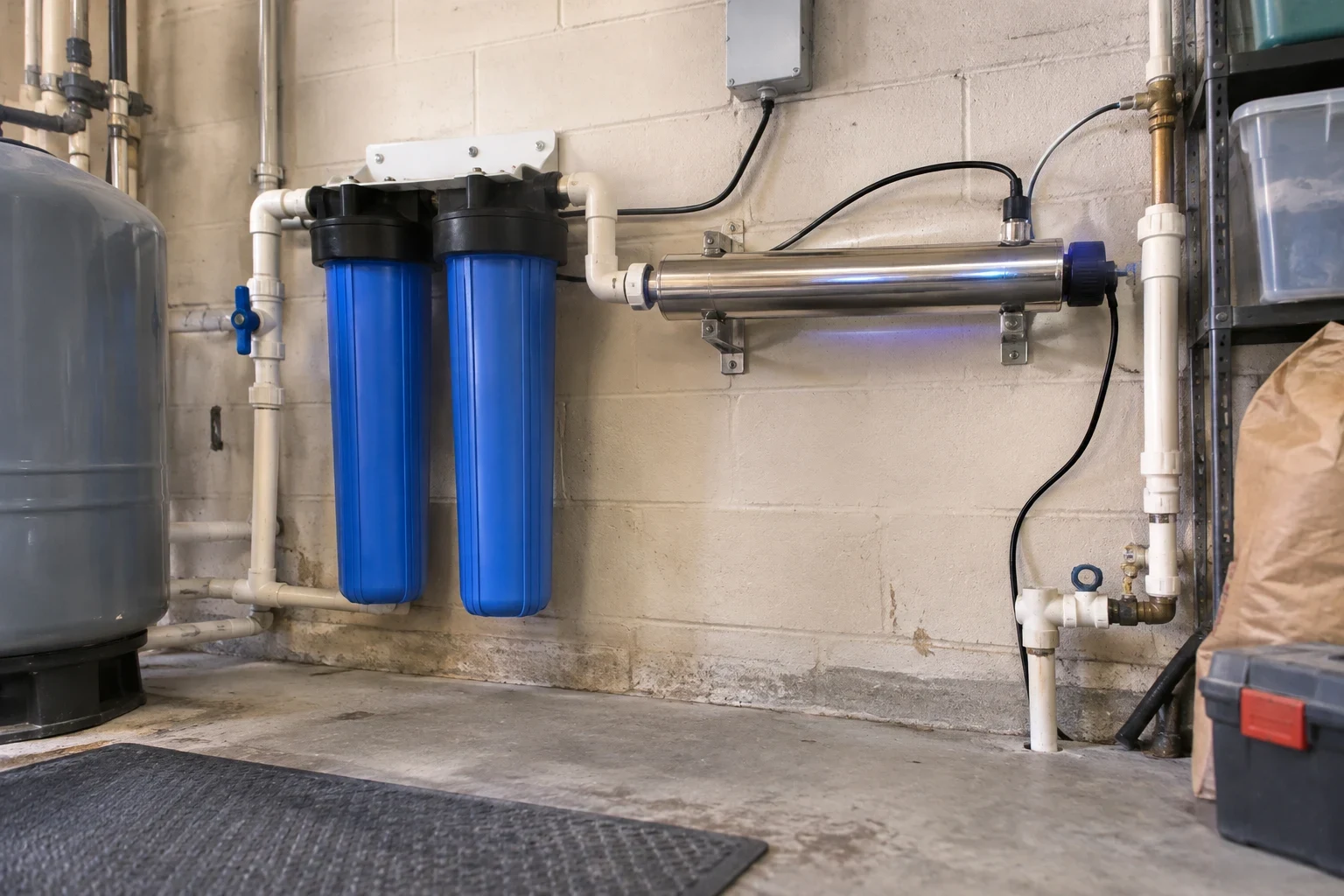
Adding a carbon stage or prefilter in front of the softener adds equipment, though fitting both on one visit is often simpler.
Removing an old unit
Draining, disconnecting and hauling away an existing softener adds labor to the job.
How the work goes
- 1
First, a phone call
Describe the spotting or buildup you have noticed and who lives in your home. Together we decide whether a softener is the answer or whether filtration would serve you better.
- 2
A visit to look at the setup
We find where your main line comes in, locate a drain and outlet, and measure the space. You then receive a written estimate listing each part.
- 3
Installation day
Floor protection goes down first, then we shut off the water, fit the bypass and plumb in the softener. Before leaving, we flush the system, inspect every joint for leaks and take away packaging and offcuts.
- 4
A walkthrough of the care routine
We show you how to use the bypass, read the valve display and check the salt. You also get a short note on what to watch for, such as salt bridging in humid weather.
- 5
We check back
Once the softener has run for a few weeks, we get in touch to hear how the water feels and adjust the settings if your use has shifted.
Water softener questions
Will softened water taste salty?
Most people notice no taste at all, since the sodium exchanged at typical hardness levels is slight. If you want drinking water with less sodium, a reverse osmosis system under the kitchen sink takes care of it. Potassium chloride also works in the brine tank in place of salt.
How often do I add salt?
That depends on your hardness, the size of your household and how the valve is set. Most homes add a bag every month or two. Keep the salt a few inches above the water in the brine tank and break up any crust that forms on top. We point all of this out during the walkthrough.
Does a softener need electricity and a drain?
It needs both. The control valve runs from an ordinary outlet, and the rinse water from each regeneration has to reach a drain. We confirm both on our first visit so the drain run is planned well before installation day.
Are salt-free conditioners the same thing?
They are not. A salt-free unit alters how minerals behave without taking them out, so spotting on glass can continue. An ion-exchange softener removes the hardness itself. We explain the trade-offs plainly so you can choose with clear information.
Who looks after the softener once it's in?
We stay involved for as long as you like. Our ongoing customer support for maintenance, filter replacements, and service needs means a single phone call covers salt questions, setting changes or a valve that needs attention. The same people who installed it are the ones who answer.
Ready for softer water?
Tell us what you are noticing around your home, and we will talk through the size and setup that fit. We will check back after it is installed, too.