ServicesWell Water Treatment
Well Water Treatment in Oldsmar
If your well water smells of sulfur, leaves orange stains or clouds the glass, we design a treatment setup around what is actually in it. We install it with care, check back once it has settled in, and show you how to look after it.
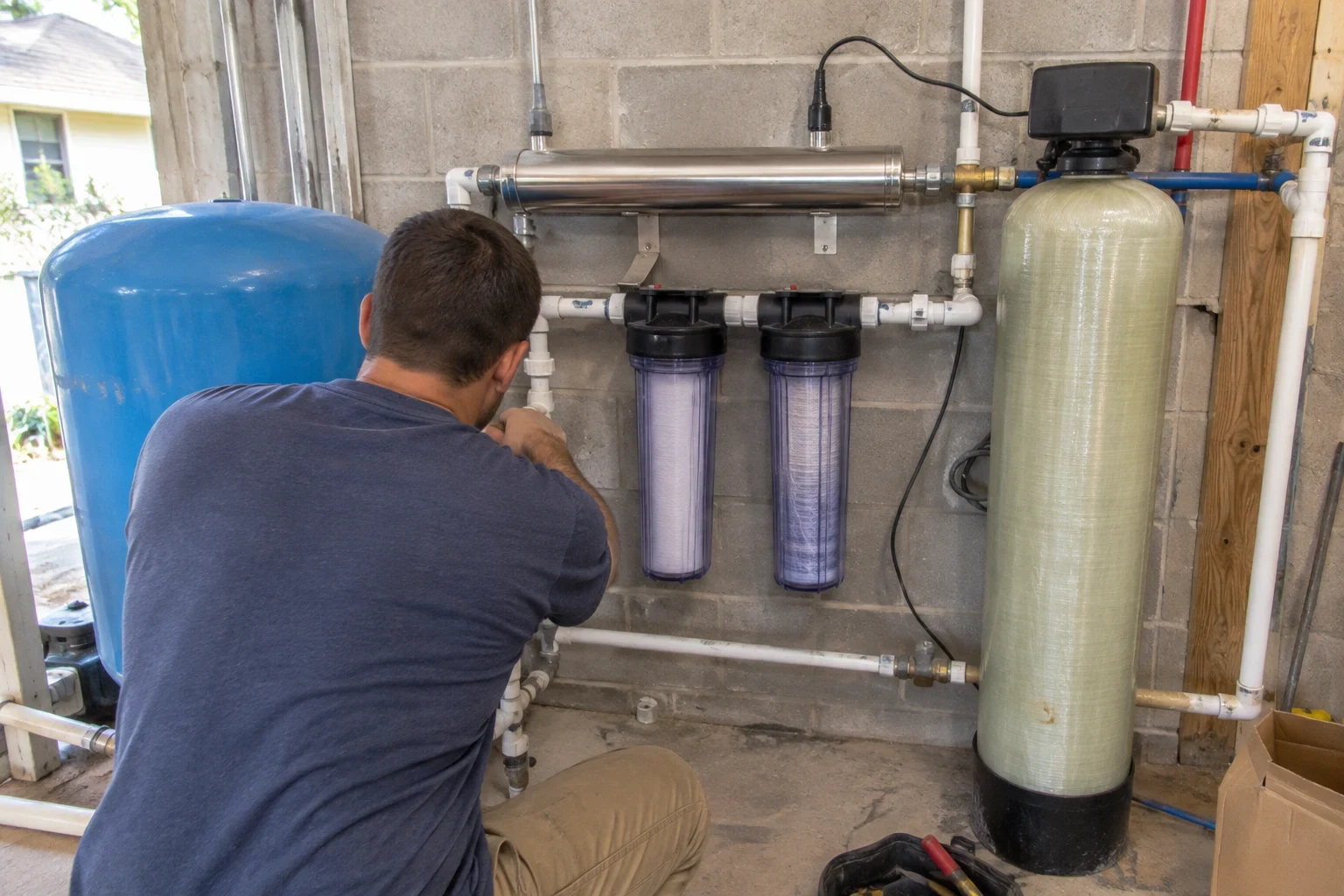
Treatment built around what your well delivers
Water from a private well reaches your tap exactly as the ground left it, with no plant cleaning it along the way. For many owners that means hydrogen sulfide, the rotten-egg odor, and dissolved iron that leaves orange marks in sinks and toilet bowls. Sand, grit and hardness often come along too, wearing on fixtures and water heaters over time.
One filter cannot do all of that well. We start by matching each piece of equipment to a specific problem. Sulfur and iron generally need an oxidation stage, followed by a filter that traps what comes out of solution. Hardness gets its own step. A sediment screen sits at the front so everything after it stays clean and lasts.
Sulfur and iron often turn up together in well water around Oldsmar, so we look at everything your water carries before suggesting equipment. After the system has been running for a while, we return to see how it is doing and show you the upkeep that keeps it performing like it did on the first day.
What the work includes
A look at your current setup
We see the wellhead, pressure tank, existing equipment and where a drain line can run. If you have a recent lab report on your water, we read it with you and explain what each number means for treatment.
Sediment protection
A sediment filter or spin-down screen goes in first. It keeps sand and grit from fouling the valves and media downstream.
Sulfur and iron removal
For odor and staining we typically use air injection or another oxidation step paired with a backwashing filter. The oxidation turns dissolved iron and sulfide into particles the media can trap, and the backwash cycle cleans them out on a schedule.
Hardness and finishing steps
Where hardness is part of the problem, a softener follows the iron filter. If you want better drinking water at the kitchen tap, a reverse osmosis unit can be added under the sink.
Clean installation
We use a bypass valve so you can isolate the system without losing water, label the shutoffs, and leave the area as tidy as we found it.
Follow-up and care instructions
After the system has run for a while, we check back on smell, staining and pressure. We also leave you a plain written note on what to replace and when.
When your well water is telling you something
Water that smells like rotten eggs
That odor is hydrogen sulfide, and wells pick it up often. You will usually notice it most in the shower or when a tap first opens.
Reddish marks that keep coming back
When a reddish-brown tint shows up in the toilet bowl, around the tub drain or on white towels, dissolved iron is the usual cause. Bleach tends to set those marks rather than lift them.
Cloudy or gritty water
Grit collecting in faucet aerators, or a haze in a glass of water, means sediment is slipping past the well screen.
Scale on fixtures and heaters
A white crust on showerheads and a rumbling water heater both point to hardness minerals building up.
Old equipment that stopped keeping up
When odor or stains return with a filter already installed, the media may be worn out or the system may never have been sized right. The Water Softener & Filtration System Replacement page covers that work.
What to expect from start to finish
- 1
First call
Describe what you are noticing, from smell to stains, and what equipment is already in place. We will ask how many people live in your home and whether you have any lab results to share.
- 2
Visit and written estimate
We look over the well equipment and the space around it. You then get a line-item estimate that names each component, what it does and why we chose it.
- 3
Installation day
Water is shut off at the pressure tank while we plumb in the bypass, the equipment and the drain line. We flush the new media, program the backwash timing and check pressure at your fixtures. In most homes the water is off for only part of the day.
- 4
Our return visit
When the system has had time to settle, we come back to confirm the odor and staining are gone. Any fine-tuning, like backwash frequency or air draw, gets done during that visit.
What shapes the cost of well treatment
Well systems vary more than city water setups, so the price depends on what your water needs and how your equipment is laid out. We explain each line on the estimate before any work begins.
- How many problems the water has
- Sulfur alone needs less equipment than sulfur, iron and hardness together. Each added step adds a tank or filter.
- Well flow and household demand
- The system has to be sized to your pump's flow rate and the number of bathrooms in use at once. An undersized filter lets odor slip through when demand peaks.
- Space and drain access
- Backwashing filters need a place to discharge. A long drain run or a cramped equipment area adds labor.
- Removing old equipment
- Taking out failed tanks and replumbing around them is part of some jobs and not others.
Questions about treating well water
Something not covered here? (813) 544-4850
Do I need a lab report before you can recommend a system?
It makes the recommendation far more precise. A report from an independent lab shows the iron, sulfide and hardness levels, and those numbers decide how large each tank should be. If you do not have one yet, we can still discuss what you see and smell at the tap and outline the likely setup.
The sulfur smell is only in my hot water. Will treatment fix it?
Not always on its own. When only the hot side smells, the water heater's anode rod is often reacting with the water and producing the odor inside the tank. Treating the whole house cuts the sulfide that drives that reaction, and we will tell you honestly if the heater needs attention too.
Where does the backwash water go?
A backwashing filter rinses itself on a timer and sends that rinse water to a drain line. During the visit we work out where the line can run, then set the cycle so it uses no more water than the media needs to stay clean.
How much upkeep does a well system need?
The sediment filter at the front is swapped out at set intervals, and if your setup includes a softener, its brine tank needs a bag of salt from time to time. Oxidation filters largely clean themselves but are worth a look every so often. Our ongoing support covers maintenance, filter replacements and other service needs, and the Water Softener Repair & Maintenance page explains that side more fully.
Can you add drinking water treatment too?
Yes. A lot of well owners add an under-sink reverse osmosis unit for cooking and drinking water. With the whole-house system handling iron and sediment first, the RO membrane is spared that load and lasts longer.
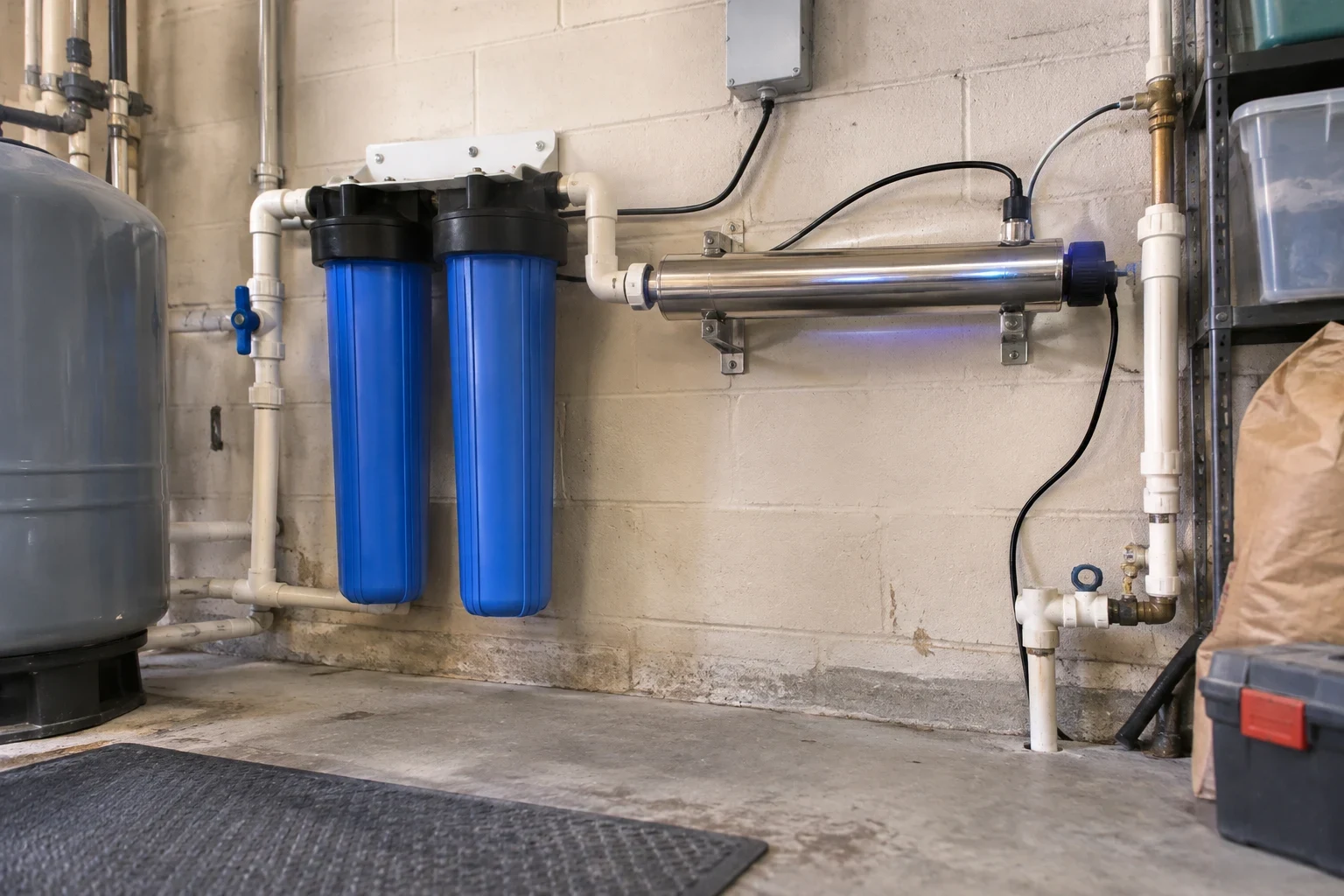
Ready to sort out your well water
Tell us what you notice at the tap and what is installed now. We will explain what would help and how we would set it up in your home.