ServicesSystem Replacement
Water Softener & Filtration System Replacement in Oldsmar
When a softener or filter system has reached the end of its useful life, we replace it cleanly. We size the new unit to your home, fit it to your plumbing with care, and come back after it has settled in to make sure it is working the way it should.
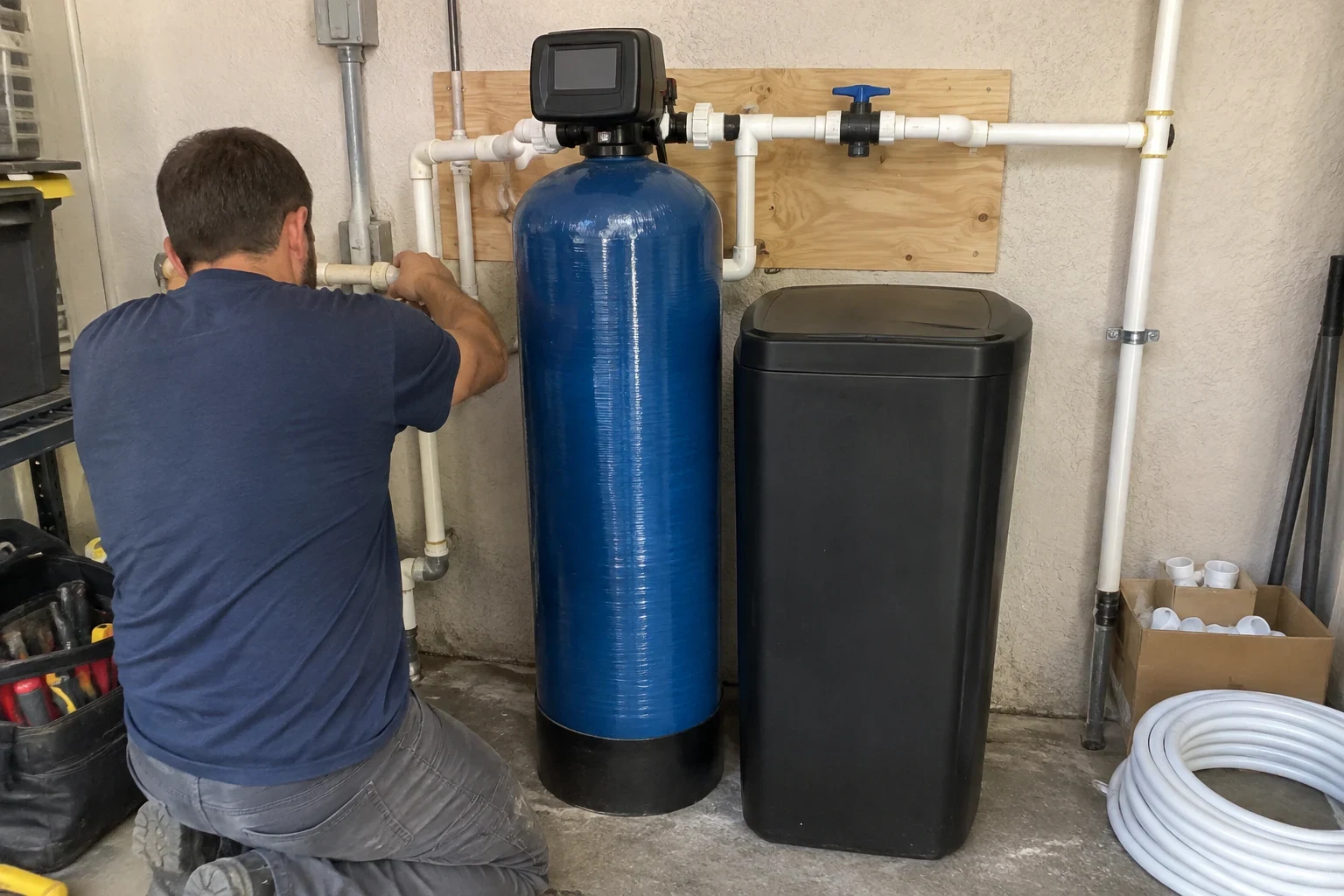
A fresh system, fitted properly
Softeners and filter systems wear out in predictable ways. Resin beads break down, carbon media gets used up, control valves age past the point where parts are easy to find, and tanks crack. At some point another repair stops making sense, and a replacement is the better use of your money.
We start by looking honestly at what you have. If a repair will give you good years, we will say so and point you to our Water Softener Repair & Maintenance service instead. If replacement is the right call, we explain why and what we would install in its place, in plain terms.
The job doesn't end when the new unit is running. We check back after installation, answer the questions that come up in the first weeks, and show you how to look after the system so it lasts.
What a replacement includes
- Careful removal of the old unit
- We drain and disconnect the old system, cap anything that needs it, and carry it out of your home. Old tanks, salt and spent media leave with us.
- A system sized to your household
- We match the new unit to your household size, your water use and the problems you want solved. An oversized tank wastes salt and water, and an undersized one runs out between cycles.
- Bypass, fittings and drain line
- We check the existing bypass valve and connections, and replace them if they are corroded or stiff. The drain line is run with a proper air gap so wastewater cannot siphon back.
- Programming and startup
- We load the media, flush the system, set regeneration to suit your water use and confirm there are no drips at any joint before we leave.
- A walkthrough of everyday care
- Before we go, we show you the bypass, how to read the control valve, when to add salt or change cartridges, and what normal looks like.
Signs your system is due for replacement
Hard water is back
Spots on glassware and scale on fixtures return even though the softener is full of salt and cycling. That usually points to resin that has worn out.
Beads or grit at the tap
Small amber or brown beads in an aerator or toilet tank mean the resin or an internal screen has broken down. The bed is no longer doing its job.
Chlorine taste has returned
If a carbon filter system no longer takes the chlorine taste and smell out of your water, the media is likely exhausted. On older units, replacing the whole system can make more sense than rebedding.
The control valve keeps failing
Repeated motor, timer or seal problems, especially on an older valve whose parts are hard to source, are a good reason to stop repairing. Heat in a Florida garage can shorten the life of plastic housings and electronics.
Leaks or a cracked tank
Water around the base, a brine tank that won't hold its level, or visible cracks are worth acting on before they damage floors or drywall.
Your needs have changed
A larger household, a new bathroom or a switch in what you want treated can leave the old system short. A replacement lets you size for how you live now.
What shapes the cost of a replacement
Every replacement is priced from what we see in your home, and we put it in writing before any work starts. The main drivers are the equipment you choose and how much the plumbing around it needs. We explain each line so you can decide with the full picture.
Type and size of system
A single-tank softener, a carbon filter system and a combined setup with several stages each carry different equipment costs. Tank size follows your household and water use.
Condition of the plumbing
A sound bypass and clean connections keep the job simple. Corroded fittings, an undersized line or a missing drain route add materials and time.
Where the system sits
A garage with open access is straightforward. Tight closets, outdoor placement that needs protection, or moving the system to a better spot change the labor involved.
Added stages
Some homeowners add a sediment prefilter or pair a softener with carbon filtration during a replacement. Each added stage is listed separately on the estimate.
How replacement day goes
- 1
A conversation by phone
You tell us what the current system is, how old it is and what has been going wrong. We talk through whether replacement is likely and what to expect next.
- 2
An in-home look
We see the existing unit, the plumbing around it and the space it sits in. You get a clear written estimate that lists the equipment and the work, so nothing arrives as a surprise.
- 3
Installation
We protect the floor, shut off water at the right point and swap the system. Most homes are without water for only part of the visit, and we tell you before the shutoff begins.
- 4
Startup and handover
We flush, program and test the new unit, clean up the work area and walk you through how it runs.
- 5
Our check-back
After the system has run for a while, we follow up to see how the water is, review the settings and answer anything new. You also have ongoing customer support for maintenance, filter replacements and service needs.
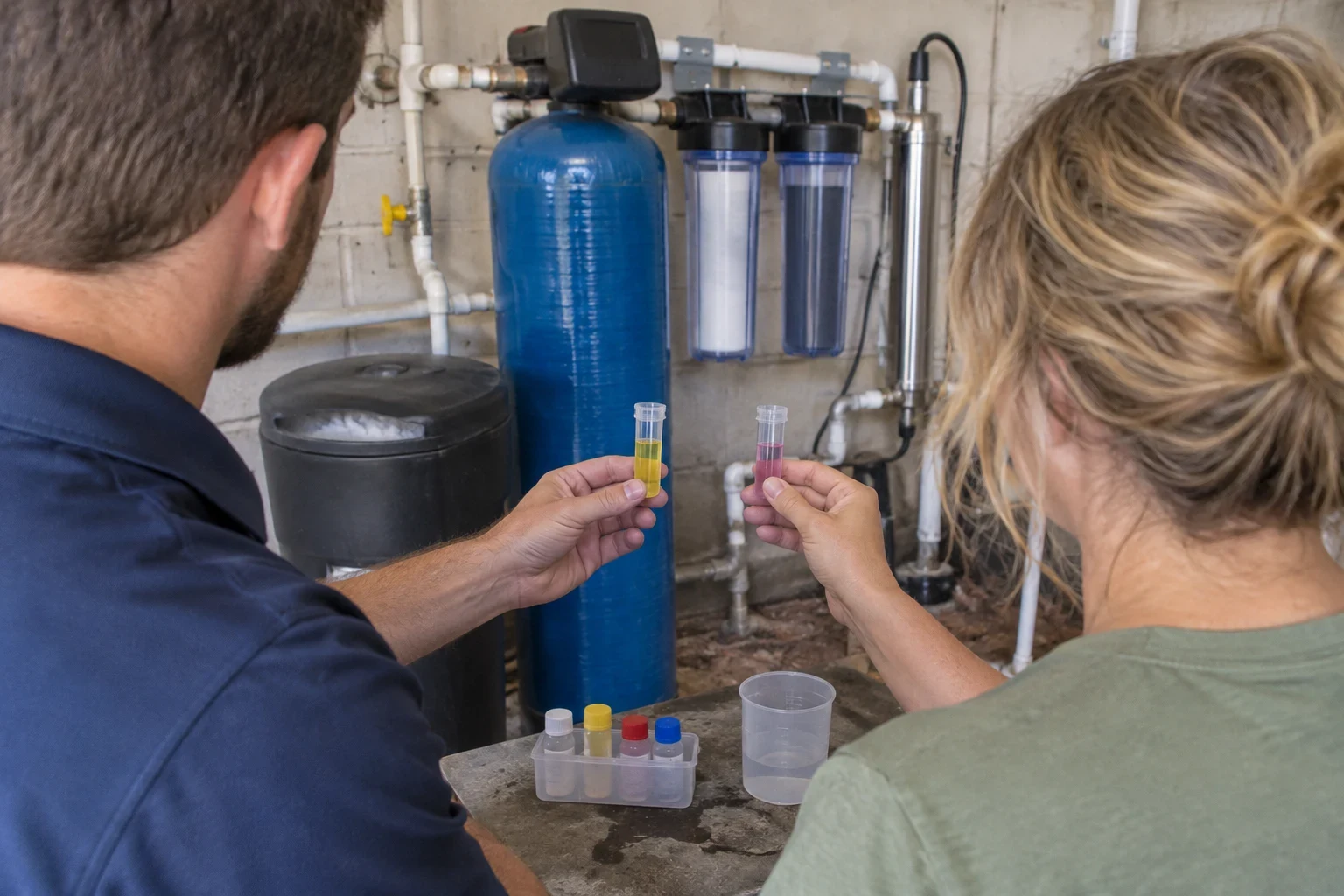
Questions about system replacement
Should I replace my system with the same type?
Not always. If the old softener or filter did what you needed, a like-for-like swap is often right. If you were still unhappy with taste, odor or spotting, we talk through whether a different setup, such as adding Chlorine & Chloramine Removal or Reverse Osmosis at the kitchen sink, would serve you better.
Can you fix it instead of replacing it?
Sometimes, and we will tell you when. A worn seal or a failed motor on an otherwise healthy unit is usually worth repairing. We recommend replacement when the resin, media, valve and tank are all aging together, or when parts are no longer practical to find.
How long will we be without water?
Only for part of the visit, while the old unit is disconnected and the new one is plumbed in and flushed. We let you know before we shut the water off and when it is back on.
What happens to the old system?
We take it with us, along with any leftover salt and spent media. You are left with the new unit, a tidy work area and no equipment to haul away yourself.
Do you follow up after the install?
Yes. We check back once the system has had time to run in your home, look at how it is performing and adjust settings if needed. After that, we are available by phone for maintenance, filter replacements and service needs whenever they come up.
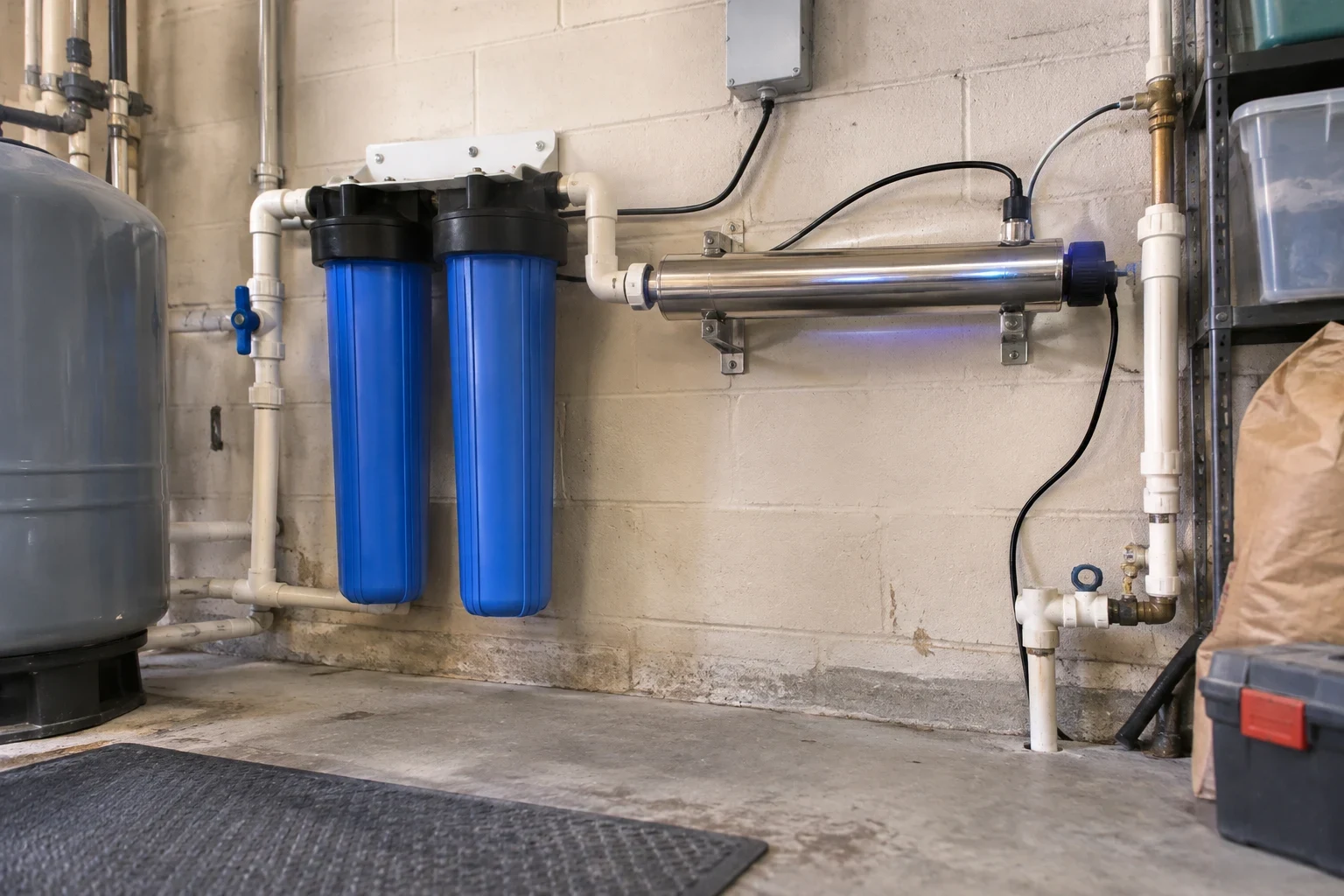
Ready to retire the old unit
Tell us what you have now and what has been going wrong. We will explain whether replacement makes sense and what a new system would look like in your home.